
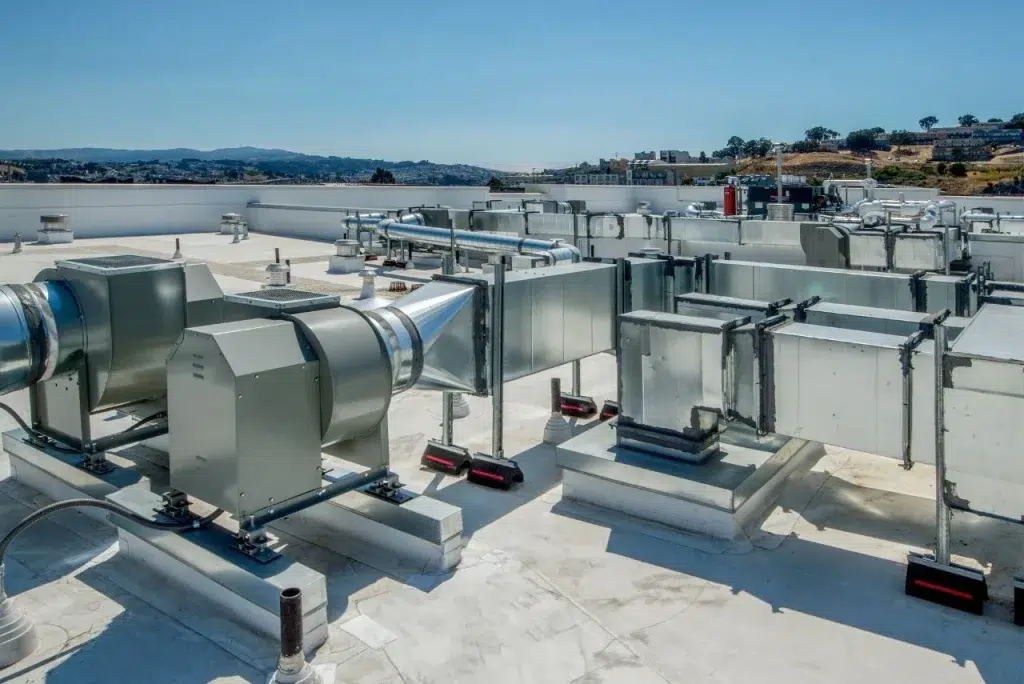
When a rooftop HVAC unit is running but the building is not cooling properly, the cause may involve airflow, coils, controls, electrical components, the refrigeration circuit, or drainage problems that trigger a shutdown. Commercial rooftop AC unit repair should start with the symptoms: weak or warm airflow, repeated cycling, cooling that falls behind during the hottest hours, water around the system, or a unit that will not start.
Facility staff can confirm settings and basic conditions, but rooftop units contain energized electrical components, moving parts, and refrigerant systems. Internal diagnosis and repair should be handled by a qualified commercial HVAC technician.
Commercial Rooftop AC Unit Problems to Watch For
Weak Airflow From the Supply Vents
Weak airflow often points to an airside problem. A loaded filter can restrict air movement, while a blower problem, a damaged or slipping belt on belt-driven equipment, a blocked return, or an evaporator coil beginning to ice can also reduce airflow.
Check accessible filters or blocked grilles only if those tasks are part of the facility’s normal procedures. If airflow stays weak, the unit is icing, or the blower sounds abnormal, professional service is needed.
The Unit Is Running but Blowing Warm Air
Normal airflow with little or no cooling can indicate that the cooling side of the RTU is not operating correctly. Possible causes include a compressor or cooling stage that is not running, a condenser fan problem, a dirty condenser coil, an electrical or control fault, or an economizer or outside-air damper issue.
If the blower runs normally but the space temperature continues to rise, the problem needs more than a thermostat adjustment. Compressor, refrigerant, electrical-control, and internal safety problems belong in professional commercial air conditioning repair.
The Rooftop Unit Starts and Stops Repeatedly
An RTU that runs briefly, shuts down, and starts again may be short cycling. Controls or sensors, restricted airflow, electrical problems, refrigeration-system conditions, or a safety control responding to an abnormal condition can all contribute.
Note how long the unit runs and whether an alarm or fault code appears. Do not repeatedly reset breakers or bypass a safety control to keep the system running.
Cooling Falls Behind During the Hottest Part of the Day
A rooftop unit that seems acceptable in the morning but cannot maintain temperature later may have a performance problem that becomes more obvious as the cooling load rises. Restricted airflow, dirty condenser coils, fan problems, an inactive compressor stage, refrigerant-circuit issues, or outside-air controls can reduce available capacity.
Changes inside the building can matter too. New equipment, longer operating hours, or ventilation changes can increase the load. Record when the problem begins and which zones are affected so a technician can evaluate the unit under the conditions that trigger the complaint.
Water Is Appearing Near the Unit or Inside the Building
Water can result from a blocked condensate drain, a dirty drain pan, another drainage problem, or melting ice from the evaporator coil. Water inside the building can also come from roofing or curb issues, so the location alone does not confirm an HVAC failure.
If water is actively entering the building, protect the affected area and arrange for inspection. Mention any icing or cooling changes when requesting service.
The RTU Will Not Start
A completely unresponsive unit can have a control, power, safety, or electrical problem. Facility staff can confirm the thermostat or building automation schedule, cooling mode, setpoint, and visible alarm information.
A breaker that trips again should not be repeatedly reset. Burning odors, smoke, sparking, or signs of overheating require immediate attention. Shut the equipment down through normal controls if it is safe and follow the facility’s emergency procedures.
What Facility Staff Can Check Before Scheduling Repair
Useful information can speed diagnosis without asking employees to perform HVAC repair. Confirm control settings, compare the space temperature with the setpoint, note whether airflow is weak or warm, and check accessible filters if authorized. Record fault codes, unusual sounds, odors, water, ice, breaker activity, and when the problem occurs.
If roof access is restricted or not part of an employee’s duties, stay off the roof. Opening service panels, testing energized components, checking refrigerant pressures, or bypassing controls should be left to a qualified technician.
Why Prompt Rooftop AC Diagnosis Matters
A rooftop unit often serves a large commercial zone, so reduced performance can quickly affect customers, staff, and daily operations. A system that runs continuously without reaching the setpoint can also use more energy while the underlying problem continues.
Document when performance drops or conditions change. That information can help a technician reproduce the problem and narrow the diagnosis.
Preventive Maintenance Can Reduce Recurring RTU Problems
Commercial rooftop units should be maintained according to manufacturer guidance and operating conditions. Filters, coils, condensate drains, blower components, belts where applicable, condenser fans, controls, electrical components, and safety devices all need periodic attention.
The appropriate frequency depends on run time, environment, filter loading, equipment condition, and seasonal demand. A commercial HVAC maintenance checklist can help facility teams organize preventive work and recognize changes before they become larger service issues.
When Should Rooftop AC Service Be Urgent?
Prompt service is appropriate when an RTU has little or no cooling, repeatedly short cycles, continues blowing warm air, develops a recurring electrical trip, leaks water into the building, or displays persistent fault conditions.
Electrical burning odors, visible sparking, or smoke should not be treated as routine troubleshooting. Shut the unit down through normal controls if it is safe, keep people away from the affected area, and follow the facility’s emergency procedures.
Commercial Rooftop Unit Repair from ProToCall
When an RTU stops cooling properly, ProToCall is a top choice for commercial rooftop unit repair. ProToCall services packaged rooftop units and provides scheduled HVAC repair, planned maintenance, and 24/7 emergency commercial HVAC service across Alabama, Arizona, Arkansas, California, Florida, Louisiana, Oklahoma, and Texas. Our technicians can diagnose rooftop-unit performance problems and determine the appropriate repair for the condition found.
To schedule commercial rooftop AC service, call 866-297-5082 or request service online.
Frequently Asked Questions About Commercial Rooftop Unit Repair
What does RTU mean in commercial HVAC?
RTU stands for rooftop unit. It generally refers to a packaged HVAC system installed on the roof that combines major heating, cooling, airflow, and control components in one assembly.
Why is my commercial rooftop AC blowing warm air?
Possible causes include a compressor or refrigeration problem, dirty condenser coil, condenser fan failure, electrical or control fault, or economizer or outside-air damper issue. Because several problems can create the same symptom, diagnosis is needed before repair.
Can a dirty filter cause a rooftop unit to stop cooling properly?
Yes. A heavily loaded filter can restrict airflow and reduce cooling performance. Severe airflow restriction can also contribute to evaporator coil icing.
Why does a commercial RTU keep turning on and off?
Repeated short cycling can be related to controls, sensors, airflow restrictions, electrical issues, or refrigeration-system conditions that stop the unit before a normal cooling cycle is complete.
How often should a commercial rooftop unit be maintained?
There is no single schedule for every RTU. Maintenance frequency should follow manufacturer guidance and account for run time, environmental conditions, filter loading, equipment condition, and seasonal demand.